
Paqudu: The Long Arms of Fatherly Justice

“Guardians of Peace, Keepers of Hope”
Every society needs some kind of order to survive. Some do it voluntarily, others require coercion... Up to and including violence to keep the underclasses in line.
Who keeps the people in line in a city ruled by gods?
The Paqudu.
They serve a vital function, keeping the city's social structure functioning through a combination of intimidation, investigation, and when necessary, violence.
Controlled by the divine Isimud through the Ministry of Serenity, they are the long-reaching arm of the Fathers' justice - or what passes for it in the shadow of the ziggurat.
Opinions on the Paqudu range from the enthusiastic to the downright hateful, depending on where you live.
To the affluent denizens of Zal-Antagal, they are the necessary wall separating them and their wealth from the unwashed masses below.
In the slums of Kug Nansha, they are seen as the nightstick of the Fathers, keeping the underclass from knocking over the social ladder of the forever city.
Some are more equal than others
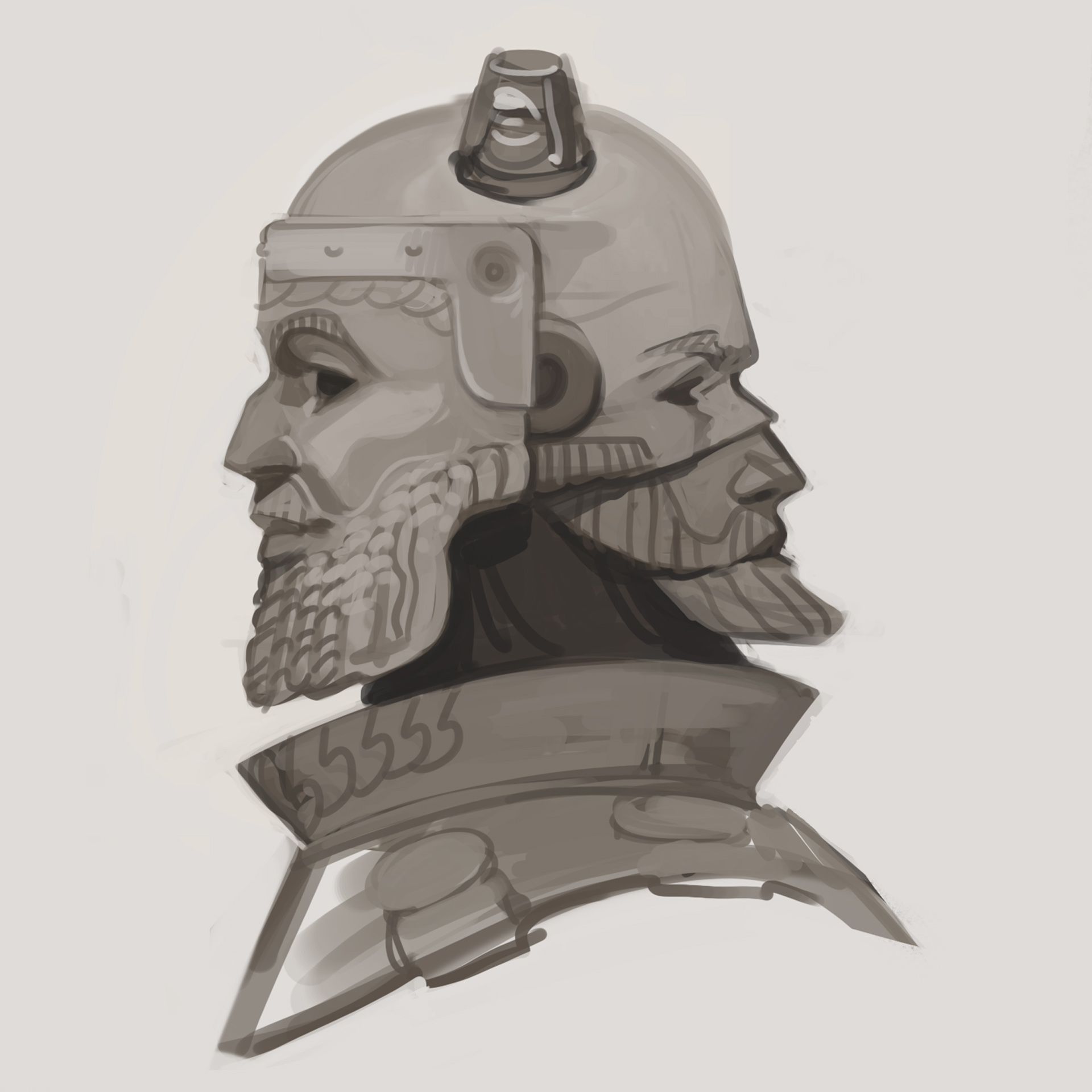
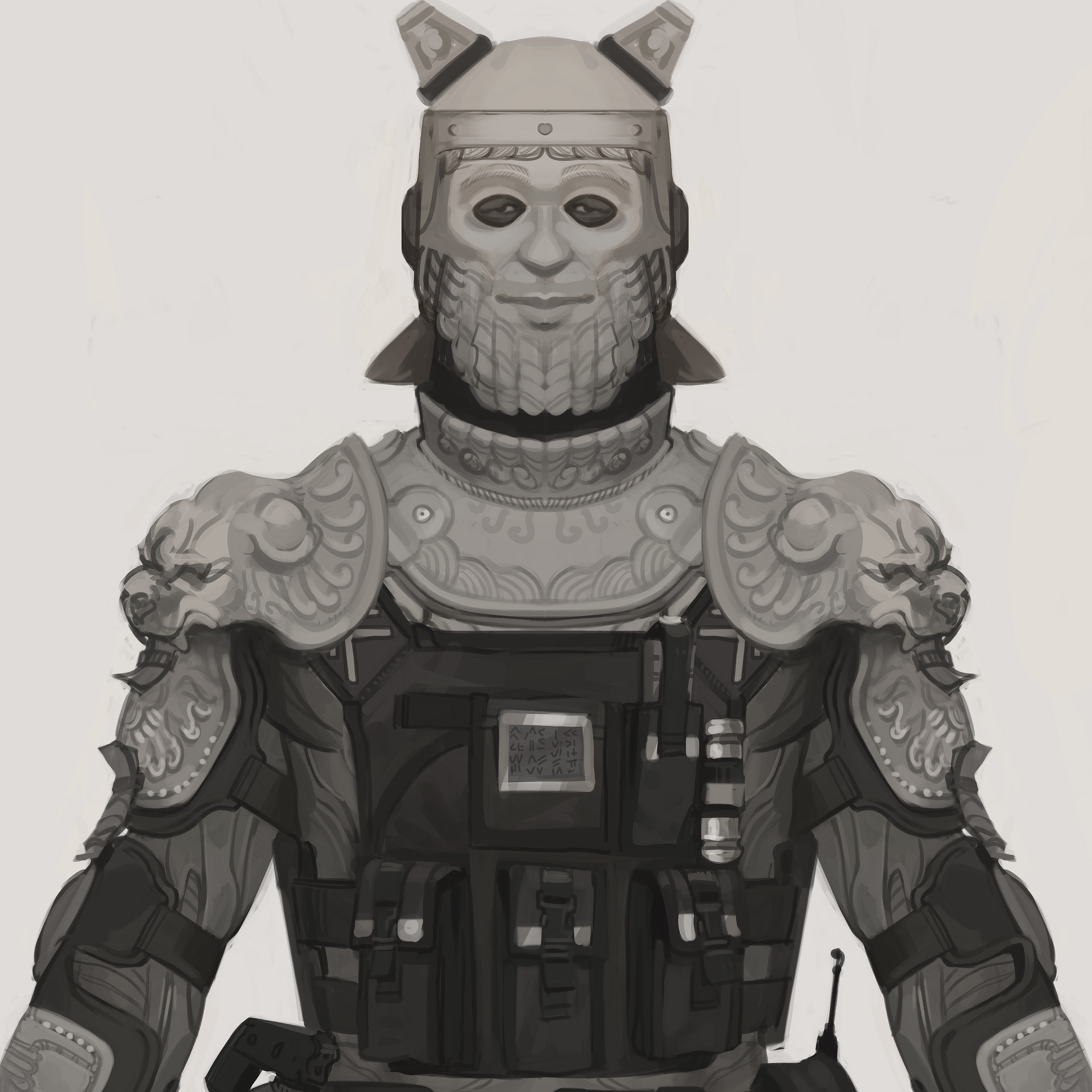
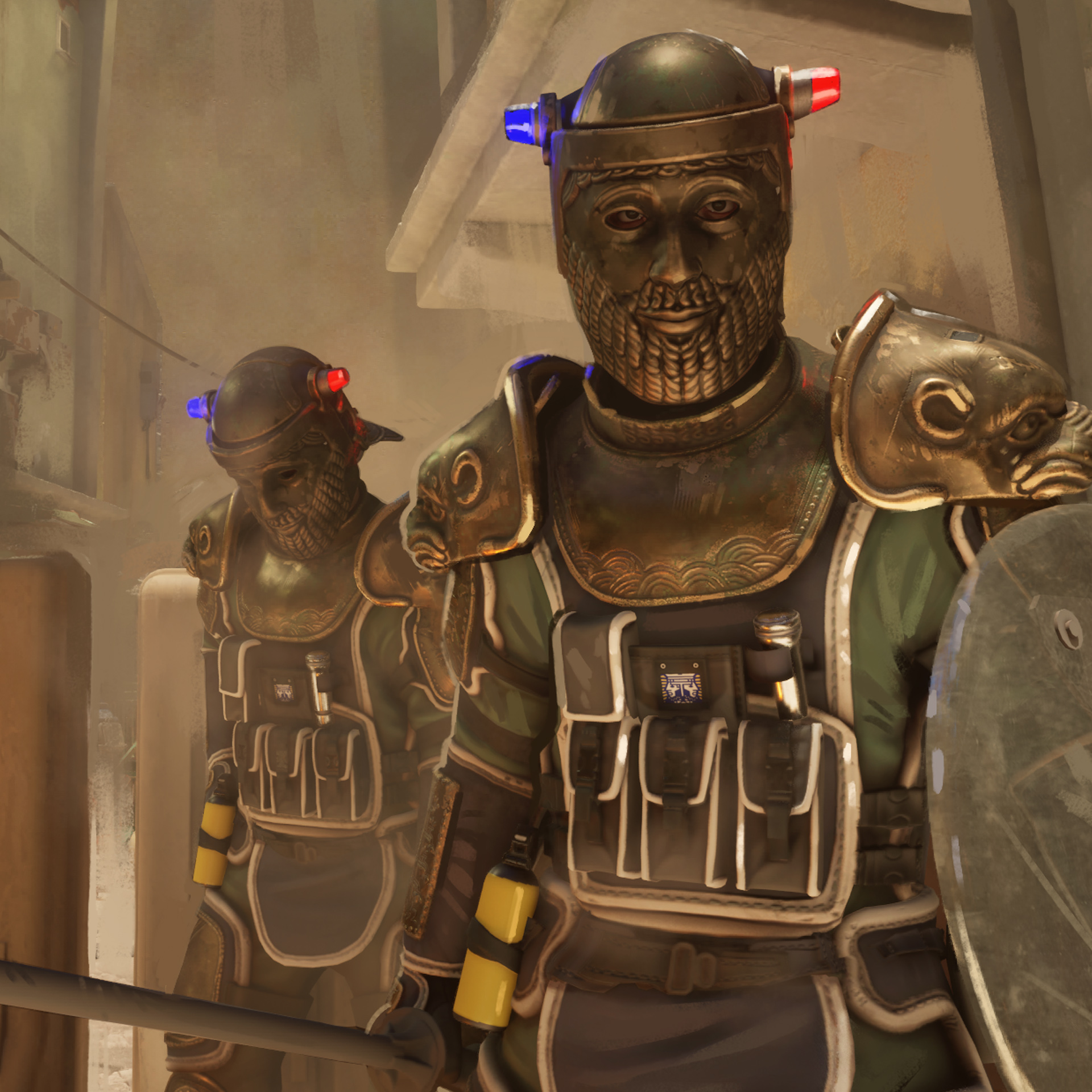
Those keeping what passes for peace are, in fact, largely an underclass themselves. Most of the rank and file are "dollfaces", Ardent manufactured from life-giving clay and imprinted with just enough intelligence and skill to enforce the existing laws without questioning them.
Born humans take care of everything else, from investigations to bureaucracy, although the Fathers have decided to use a select batch of Ardent for special investigations.
At their best, the Paqudu keep the peace and prevent Ibru from sinking into chaos.
At worst, they keep turning the handle, grinding Ardent and human alike into fine dust.
Who were the historical paqūdu?
The historical paqūdu were a Sumerian police-like force that existed in Mesopotamia between the sixth and fifth centuries BCE, formed as the ancient realm experienced an unprecedented economic prosperity and increasing social complexity. Archeological evidence attests to their existence across the ancient empire, including its largest cities: Uruk, Babylon and Sippar.
Offices of the paqūdu were established both in great cities and smaller towns, carrying tasks we associate with the police nowadays: Surveillance, law enforcement, apprehension of criminals etc. They were also used by temples for enforcement, subordinated both to the priesthood and to local authorities, occupying a lesser, but necessary rung on the social ladder.
Interestingly, the idea of a dedicated law enforcement force did not disappear with the conquest of Persia by Alexander the Great in 4th century BCE, but spread. Similar organizations appeared in Egypt of late antiquity and the Graeco-Roman era, like the eirenarchai (peacekeepers).